
Licensing isn't just paperwork, it's your agency's shield against legal exposure, client disputes, and costly compliance failures. When assets aren't properly licensed, a single copyright claim can derail projects, damage client relationships, and drain resources on legal defense. A robust licensing strategy integrates compliance into your workflows, reduces liability, and gives you the documentation you need when things go wrong.
Photo by Nataliya Vaitkevich from Pexels
TL;DR:- Effective licensing strategies protect agencies from legal, financial, and reputational risks by ensuring all assets are properly documented and compliant.
- Key elements include centralized licence tracking, clear usage guidelines, vendor audits, and team education.
- Implementing a strategy reduces audit delays, enables faster client onboarding, and strengthens your position during disputes.
- Use platforms and automation to scale compliance without adding headcount.
Most agencies treat licensing as a box-ticking exercise, grab a licence, move on, forget about it. The problem emerges months later when a client's legal team asks for proof, or worse, when a licensing platform flags unauthorized use. By then, you've lost time, credibility, and possibly money. A real licensing strategy flips this. Instead of reacting to problems, you prevent them. You build processes that capture proof automatically, make compliance visible to the whole team, and give you the documentation to defend your work if someone challenges it.
Why Licensing Protects Your Agency

At its core, licensing is a contract between you and the content provider. You pay for the right to use an asset under specific terms, typically tied to usage scope, industry, geography, and exclusivity. When you breach those terms (using an image outside the licensed scope, or failing to have a valid licence when you claimed you did), you expose yourself and your clients to claims.
The risk isn't theoretical. Insurance, compliance, and enforcement bodies investigate agencies regularly. As one source notes:
"The upshot is that insurers, MGAs, TPAs, producers, and other insurance-related entities frequently face investigations and enforcement activity.">, Protecting Your License and Your Brand: Strategies for Insurance Department Enfo
That applies equally to creative agencies. When a client's legal team or a licensing enforcement agency comes calling, the first question is always: "Do you have proof?" If you can't produce a screenshot, email receipt, or certificate showing the asset was licensed on a given date, you're in trouble. Even if you did license it correctly, the absence of proof shifts the burden to you to reconstruct transactions, track down emails, and dig through platform dashboards.
A licensing strategy puts proof first. You capture it at the moment of use, store it centrally, and make it retrievable in seconds.
Key Elements of a Robust Strategy

A strong licensing strategy rests on five pillars:
1. Centralized Licence Repository
Every licence your agency holds should live in one place, not scattered across individual inboxes, shared drives, or browser bookmarks. A central repository (whether a dedicated tool, a secure cloud folder, or a database) lets any team member confirm that an asset is licensed before it goes into a project. It also speeds up compliance audits. Instead of asking 20 people to send their invoices, you pull a report.
2. Clear Usage Guidelines
Ambiguity kills compliance. Your team needs to know exactly what they can and cannot do with each asset. Some licences permit unlimited commercial use; others restrict it to one client or one campaign. Some forbid modification; others require attribution. Document these rules in an easy-to-reference format, a short guide, a checklist, or even labels on assets themselves.
3. Vendor and Platform Audit
Know where your content comes from. Reputable platforms (Shutterstock, Adobe Stock, Envato, Freepik, Canva, Getty, iStock) have legal teams and indemnify their users. Cheaper or unknown sources may not. Audit your vendors quarterly, confirm they're still in business, check their licence terms haven't changed, and verify they offer the audit trail and documentation your clients expect.
4. Proof Capture at Point of Use
The moment a licence is acquired or an asset is added to a project, capture the proof. Screenshot the licence confirmation, download the certificate, log the transaction. Automate this where possible, many platforms offer API access or bulk export. The goal is to make proof capture frictionless; if it requires manual work, people skip it.
5. Team Training and Accountability
Your team is your agency's first line of compliance. They need to understand why licensing matters, what the risks are, and exactly what they're expected to do. Make it part of onboarding, reinforce it in project kickoffs, and measure adherence. Flag violations early, the cost of retraining someone is tiny compared to the cost of a licensing dispute.
How Licensing Reduces Risk
Licensing strategies reduce risk across four dimensions:
Legal Protection: With documented proof of every licence, you can defend yourself in disputes. If a client claims you used unlicensed content, you produce the certificate. If a licensing platform flags unauthorized use, you show the transaction. Proof doesn't guarantee you'll win a dispute, but it dramatically improves your odds and shifts the burden to the other party.
Client Confidence: Clients increasingly demand proof that content is properly licensed. When you can hand them a comprehensive audit trail, "here are all the assets used in this project, here's the licence for each", you reduce their legal anxiety and strengthen the client relationship. You also insulate yourself from client liability claims; they can't sue you for copyright infringement if you proved all your content was licensed.
Operational Efficiency: A licensing strategy forces you to ask questions early: "Do we have the right licence for this use?" "Does this platform's terms allow what we're planning?" These conversations prevent rework and disputes downstream. You catch licensing issues during planning, not during delivery or after launch.
Financial Protection: Licensing disputes are expensive, legal fees, settlements, and damage awards add up fast. A licensing strategy reduces the frequency and severity of disputes. It also helps you avoid overpaying for licences; when you track what you've bought and what you use, you spot opportunities to consolidate vendors or switch to more cost-effective platforms.
Real-World Impact: How Agencies Win

Several types of agencies have embedded licensing strategies with measurable results:
Marketing Agencies: A mid-sized marketing agency working with financial services clients faced compliance audits every six months. Asset tracking was manual, spreadsheets, email chains, and guesswork. After implementing a centralized licence repository and process to log every asset at intake, they cut audit prep time from three weeks to two days. Their clients also requested fewer follow-up documents, reducing friction during renewal conversations.
Design Studios: A design studio delivering brand kits and guidelines to corporate clients built a system where every asset (font, icon, illustration, stock image) includes a linked licence card. Clients receive not just the design files but a complete asset audit. This moved them from "we think everything is licensed" to "here's proof." Disputes dropped. Referrals increased because clients trusted their work.
Freelancer Networks: Agencies managing teams of remote freelancers used to chase invoices and licences individually. Now they provide a shared stock account and a tool that automatically logs every download. Freelancers see real-time what's licensed; the agency sees exactly what's been used by whom and when. Accidental overspending stopped. Licence disputes between freelancers vanished because the record was objective and transparent.
Implementation: Five Steps to Start
Getting a licensing strategy in place doesn't require a massive overhaul. Start here:
Step 1: Audit Your Current State
Spend a week documenting where you currently store licences, which platforms you use, and what proof you have for recent projects. Talk to team members, ask them where they look for licence info and what confuses them. This baseline reveals gaps and priorities.
Step 2: Identify High-Risk Areas
Which projects, clients, or asset types carry the most risk? If you work in financial services or healthcare, regulatory scrutiny is high. If you use a lot of third-party content (stock images, fonts, illustrations), your exposure is larger. Start your strategy with the highest-risk areas.
Step 3: Choose Your Tools
You don't need expensive software to start. A well-organized cloud folder (Google Drive, OneDrive, Dropbox) with clear naming conventions works for small agencies. A shared database or spreadsheet works for tracking. As you scale, dedicated licence management tools (like Licence Downloader or similar platforms) automate proof capture and reporting.
Step 4: Document Your Process
Create a one-page guide that answers: Where do we get content? How do we confirm it's licensed? Where do we store proof? Who's responsible for what? Post it somewhere visible, in your project management tool, your onboarding docs, your Slack channel. Make it boring. Make it clear.
Step 5: Train and Measure
Walk your team through the process. Show them the bad outcome (dispute, legal fees, client loss) and the good outcome (smooth project, audit confidence, client trust). Measure compliance weekly or monthly, how many projects have complete licence documentation? Flag gaps and retrain as needed.
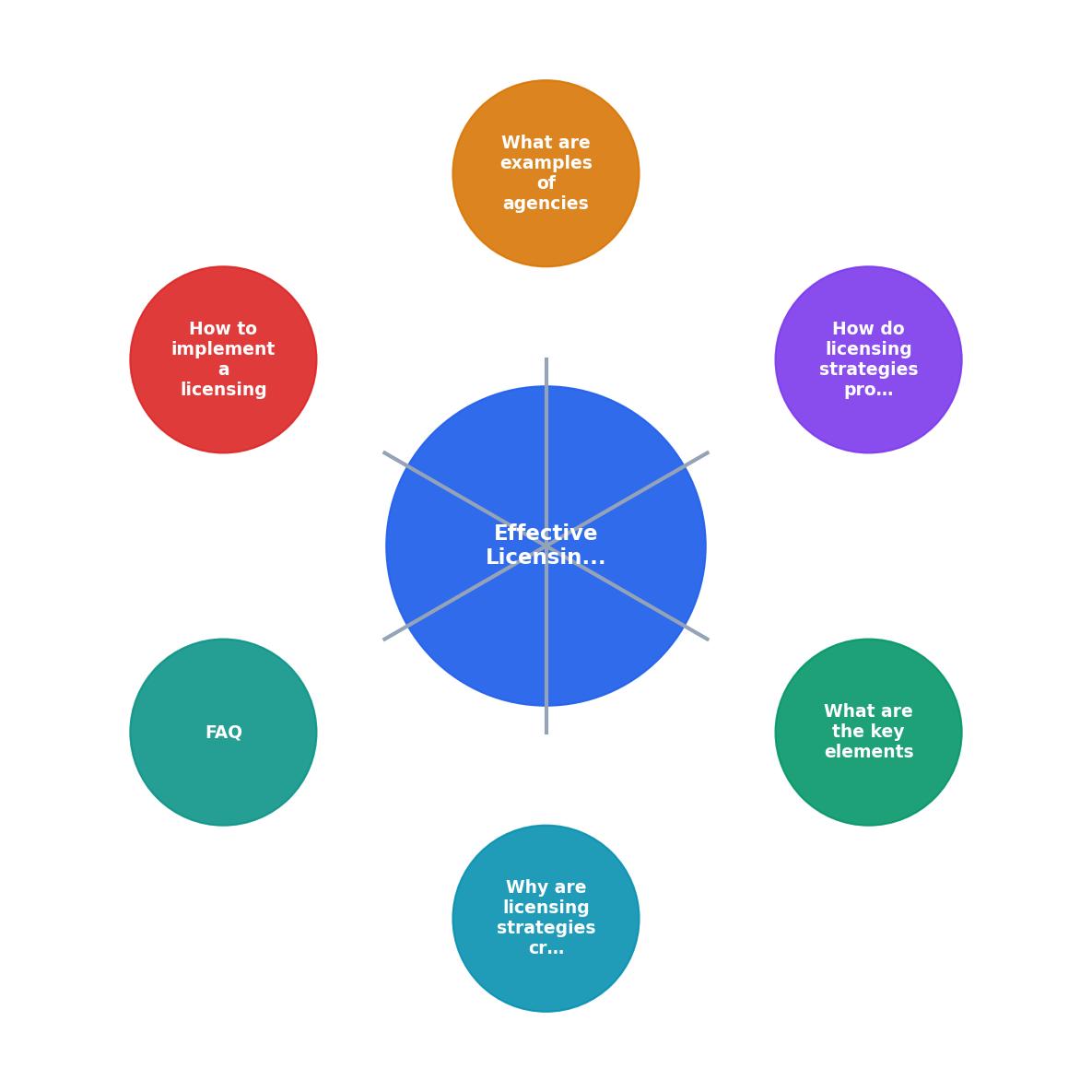
Five Pillars of a Licensing Strategy
This interactive card shows the five core pillars of a licensing strategy. Each element reinforces the others, a robust licensing framework isn't just one process, it's a system where proof capture, team alignment, and vendor oversight all work together to reduce risk and build confidence.
Implement Your Licensing Strategy
Your progress is saved automatically in your browser.
FAQ
Frequently Asked Questions
The difference between agencies that get licensing right and those that struggle often comes down to one thing: they decided early that compliance matters. Not as a legal formality, but as a core part of how they work. The upfront effort is small, a few days to set up, ongoing time to maintain. The payoff is huge: fewer disputes, faster audits, happier clients, and the confidence that your work is protected.
Additional Resources
- Strategies for Insurance Department Enforcement Actions - The first step is to read the notice carefully and understand who is asking what, and on what authority. Identifying the issuing regulator, the ...
- Risk manager - Texas Department of Insurance - At least one officer or active partner must have a risk manager license with the same or higher authority. Questions? Call us at 512-676-6500 or ...
- Risk Management Strategies: An Easy Guide 101 - Discover key risk management strategies to identify, assess, and address threats while balancing security and business agility and resource ...