
E-commerce businesses thrive on their ability to leverage attractive imagery to capture an audience's attention. However, without proper proof of licensing for these images, businesses may find themselves at risk of legal repercussions and damage to their reputation. This article explores the potential pitfalls of lacking license proof and offers practical solutions to ensure your business remains protected and credible.
Photo by Kindel Media from Pexels
TL;DR
- E-commerce businesses are vulnerable to legal issues without stock image license proof.
- A lack of licenses can damage a business's credibility and disrupt operations.
- Organizing and maintaining proper license records is essential for smooth business operations.
What are the Legal Risks of Lacking License Proof in E-commerce?

Without license proof, e-commerce businesses face significant legal risks. The most immediate threat is copyright infringement. If a business uses images without proper licensing, it opens itself up to potential lawsuits from the copyright holders. These legal battles can be costly and time-consuming, diverting resources away from core business activities.
How Does Lacking License Proof Impact Business Credibility?

Beyond legal issues, lacking license proof can severely damage a business's credibility. Customers expect businesses to operate within the bounds of the law, and any indication otherwise can erode trust. In today's digital age, news of a legal dispute can spread rapidly, tarnishing a brand's reputation almost overnight.
Furthermore, in the e-commerce sector, customer reviews and social media are effective tools for shaping public perception. A negative incident involving copyright infringement can lead to a flurry of bad reviews, which can be difficult to recover from. Maintaining organized license records not only protects legally but also upholds the trust customers place in your brand.
What are the Operational Challenges Faced Without License Proof?

Operationally, the absence of proper license documentation can lead to significant disruptions. Businesses often find themselves in a scramble when they need to provide proof of licensing, whether for audits, compliance checks, or legal defenses. This unpreparedness can halt business operations and lead to missed opportunities.
Moreover, the integration of various stock image platforms can complicate record-keeping. Each platform may have its own method of storing and providing access to licensing information, making it challenging for businesses to maintain a centralized record.
"The type of business structure the online business chooses can significantly impact its licensing requirements."
— Do I Need a Business License to Sell Online?, Do I Need a Business License to Sell Online?
How Can E-commerce Businesses Organize and Maintain License Records?
To avoid these pitfalls, e-commerce businesses must focus on organizing and maintaining their license records diligently. Here are some steps to ensure your records are audit-ready:
- Centralize Documentation: Use a digital asset management tool to store all licenses in one place.
- Regular Audits: Conduct regular audits to ensure all images used are properly licensed.
- Automate Processes: Consider using tools like Licence Downloader to streamline the process of acquiring and storing license proofs.
Businesses can also benefit from creating a template for record-keeping to ensure consistency and completeness in documentation.
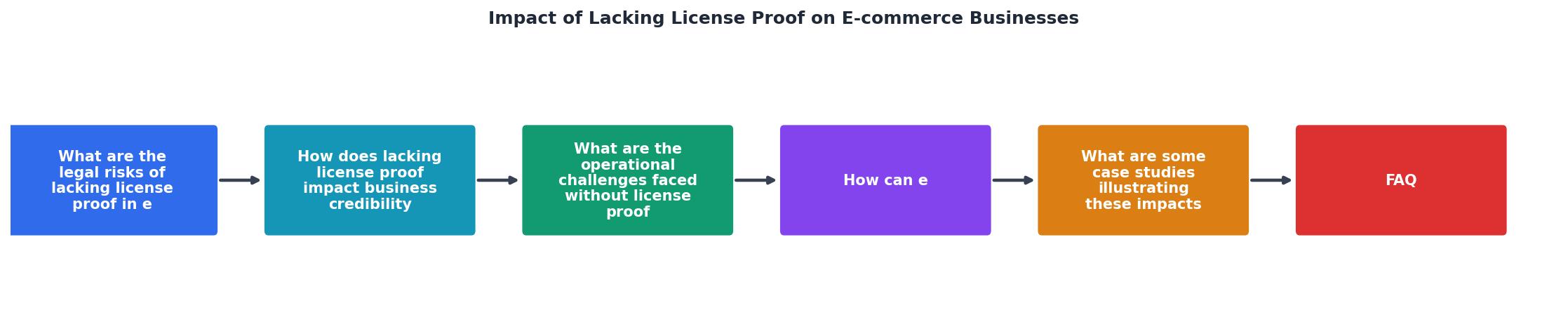
Steps to Organize and Maintain Stock Image License Records
Your progress is saved automatically in your browser.
What are Some Case Studies Illustrating These Impacts?
Consider the case of a small e-commerce store that received a cease and desist letter for using an unlicensed image in its marketing campaign. The owner, unaware of the licensing requirements, had to spend considerable time and money resolving the issue, impacting their business operations and reputation.
In contrast, another e-commerce business, which had implemented a robust license management system, was able to quickly provide proof of licensing when faced with a similar challenge, thus avoiding legal entanglements and maintaining their business's credibility.
Key takeaway: Maintaining organized license records is crucial for protecting your e-commerce business from legal and reputational risks.
FAQ
Frequently Asked Questions
In conclusion, the risks of lacking license proof for stock images in e-commerce are substantial. By implementing effective record-keeping strategies and using tools like Licence Downloader, businesses can protect themselves from legal issues and maintain their reputation. How do you manage your license records? Share your thoughts in the comments.
Additional Resources
- Do I Need a Business License to Sell Online? - Legal penalties – Governments can impose fines, revoke business rights, or force the closure of an unlicensed business. · Financial consequences ...
- 7 Consequences for Operating a Business Without a License - The penalty for operating a business without a license can be severe, ranging from hefty fines to even having your company forcibly shut down.
- 7 Consequences & Penalties for Operating a Business without ... - Failing to obtain or renew a business license can be a costly mistake, resulting in significant penalties, such as fines, lawsuits and in extreme cases, even ...