

Managing Shutterstock licenses effectively is crucial for agencies to ensure they comply with legal requirements while maintaining operational efficiency. With multiple accounts and assets to handle, agencies need robust tools and processes. This article explores the key features of Shutterstock's license management tools, compares them with other platforms, and provides strategies for internal auditing to avoid common pitfalls.
Photo by Mikael Blomkvist from Pexels
TL;DR:
Agencies can manage Shutterstock licenses effectively by leveraging specific tools for multi-account management, setting up internal auditing processes, and comparing Shutterstock's offerings with other platforms for optimal compliance.
Key Features of Shutterstock's License Management Tools
Shutterstock provides a suite of tools designed to streamline license management for agencies. These tools offer functionalities such as multi-seat accounts, centralized billing, and detailed license usage tracking. Agencies can benefit from automated license retrieval, ensuring that every downloaded asset is properly documented and compliant.

One standout feature is the ability to manage multiple users under a single account. This allows agencies to monitor asset usage across different teams and projects efficiently. Additionally, Shutterstock's detailed analytics provide insights into asset utilization, helping agencies to optimize their stock media purchases and reduce unnecessary expenditure. With these analytics, agencies can identify patterns in resource usage, allowing them to make informed decisions about future purchases and budget allocations.
Moreover, the centralized billing feature simplifies financial management by consolidating all transactions into a single invoice. This is particularly beneficial for large agencies that handle numerous projects simultaneously, as it reduces the administrative burden and minimizes the risk of billing errors. The ability to automate license retrieval further enhances efficiency, ensuring that all downloaded assets are accompanied by the correct licenses, thus preventing compliance issues.
Strategies for Multi-Account Management
Agencies often juggle multiple Shutterstock accounts to accommodate various clients and projects. Effective management of these accounts is crucial to maintaining compliance and operational efficiency. By using centralized tools that allow for seamless account switching and comprehensive asset tracking, agencies can ensure that all team members have access to the resources they need without risking unauthorized usage.

A key strategy involves setting clear guidelines for account usage across the agency. This includes defining who has access to which accounts, under what circumstances, and what protocols must be followed for asset acquisition and usage. Implementing a digital asset management (DAM) system that integrates with Shutterstock can further streamline processes by centralizing all assets and licenses in one place. This makes it easier to manage permissions, track usage, and ensure that all team members are using assets legally and ethically.
Comparing Shutterstock with Other Stock Media Platforms
When choosing a stock media provider, agencies often compare Shutterstock with other platforms like Adobe Stock and iStock. Each platform offers unique features, pricing models, and license agreements, which can impact an agency's decision.

Here's a quick comparison:
| Feature | Shutterstock | Adobe Stock | iStock |
|---|---|---|---|
| Multi-user management | Yes | Yes | Limited |
| License tracking | Comprehensive | Limited | Basic |
| Pricing flexibility | Subscription and on-demand | Subscription only | Credit-based |
| Asset variety | Extensive | Extensive | Limited to Getty images |
Shutterstock's advantage lies in its comprehensive license tracking and flexibility in pricing models, which cater to both subscription and on-demand needs. This flexibility is crucial for agencies that may have fluctuating demands and require a provider that can accommodate both high and low usage periods. Adobe Stock, while offering extensive asset variety, limits its pricing model to subscriptions, which may not be ideal for all agencies. iStock, on the other hand, offers a credit-based system that can be advantageous for agencies with sporadic needs but may lack the multi-user management capabilities that Shutterstock provides.
Setting Up Effective Compliance Systems
To ensure compliance with Shutterstock licenses, agencies need to establish robust internal auditing processes. This includes regular checks of license validity, understanding the terms of use for each asset, and maintaining an up-to-date inventory of licenses.
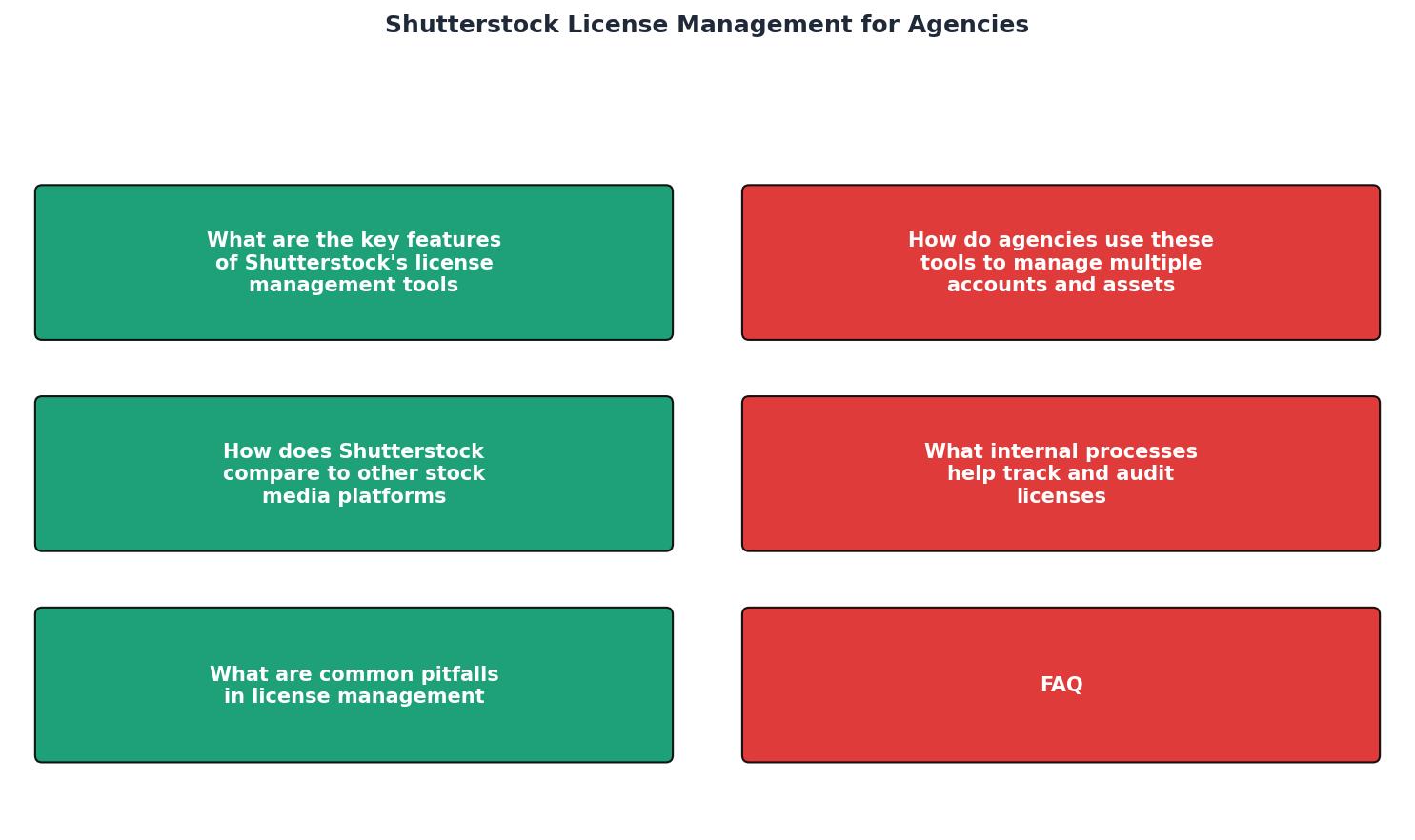
A practical approach involves setting up a compliance team responsible for monitoring license usage and conducting audits. This team should have clear guidelines on how to handle expired licenses, renewals, and responses to audit failures. Regular training sessions should be conducted to ensure that all team members are aware of the latest licensing terms and conditions. This proactive approach not only helps in maintaining compliance but also in fostering a culture of responsibility and awareness within the agency.
Internal License Audit Process
Your progress is saved automatically in your browser.
Common Pitfalls in License Management
Agencies often encounter pitfalls in managing Shutterstock licenses, such as failing to renew licenses on time or misunderstanding usage rights. These issues can lead to legal complications and financial penalties.
Real-world examples highlight the importance of setting reminders for license renewals and maintaining clear communication with team members about license terms. Agencies can use digital tools to automate reminder systems for renewals, ensuring that no licenses lapse unexpectedly. Additionally, clear documentation of all licenses and their terms can prevent misunderstandings that lead to unauthorized usage. By proactively addressing these challenges, agencies can avoid costly mistakes and maintain a smooth operational flow.
FAQ
Frequently Asked Questions
To wrap up, effective Shutterstock license management is vital for agencies to avoid legal risks and ensure operational efficiency. By leveraging the right tools and processes, agencies can maintain compliance effortlessly. How does your agency manage its stock media licenses? Share your strategies and experiences in the comments below.
Additional Resources
- How We Help Creative Agencies | Enterprise Content ... - Worry-free licensing. Licenses include third-party rights transfer, so you can share raw files or finished content with clients.
- Shutterstock Terms of Service & License Agreements - The following is a legal agreement between you or the employer or other entity on whose behalf you are entering into this agreement and Shutterstock.
- Enterprise End-to-end Creative Partner - Get peace of mind with our comprehensive licensing solutions that offer full indemnification, sensitive-use rights, and third-party transfer rights.