

Managing licenses across multiple platforms is a nightmare for agencies. With data scattered across various sources and inconsistent documentation, keeping track of licenses can become a daunting task. The lack of standardized procedures only adds to the chaos, leaving agencies vulnerable to compliance issues. However, integrated management tools and standardized procedures offer a way to simplify this process and ensure compliance.
Photo by Matheus Bertelli from Pexels
TL;DR:
Tracking licenses across various platforms is challenging for agencies due to fragmented data and inconsistent documentation. Integrated management tools and standardized procedures can simplify the process and ensure compliance.
The complexity of managing licenses across different platforms is a challenge many agencies face. Data fragmentation and inconsistent documentation practices often result in inefficiencies and potential compliance risks. This article explores why tracking licenses is so challenging and offers solutions to streamline the process.
What Makes Tracking Licenses Across Platforms Difficult for Agencies?

Agencies often manage licenses for a wide array of digital assets across multiple platforms such as Freepik, Shutterstock, and Adobe Stock. Fragmented data is one of the primary challenges. Each platform has its own way of storing and presenting license information, making it difficult to consolidate data into a single, coherent system. Moreover, inconsistent documentation practices across these platforms exacerbate the problem, as agencies struggle to keep records that are both comprehensive and easily accessible.
Another significant issue is the lack of integration between these platforms. Most agencies use a combination of stock media sites to meet their creative needs, but few tools offer seamless integration across all these platforms. This lack of integration results in manual processes that are both time-consuming and error-prone.
How Do Inconsistent Documentation Practices Exacerbate These Challenges?

Without standardization, documentation becomes a mess. Each platform may have different formats for license certificates, varying expiration dates, and unique restrictions on the use of assets. This inconsistency makes it challenging for agencies to maintain a centralized repository of licenses. The absence of standardized procedures can lead to compliance issues, especially when legal audits require precise documentation.
What Solutions Exist for Simplifying License Tracking?

To tackle these challenges, agencies can adopt several solutions:
- Integrated Management Tools: Platforms like Licence Downloader offer bulk-download and centralized storage of license certificates, reducing the workload and minimizing errors.
- Standardized Procedures: Developing a set of standard operating procedures for license management can help ensure consistency and compliance.
- Automation: Leveraging automation tools can streamline the process of collecting and organizing licenses, reducing the risk of human error.
"The ideal solution should offer automation to eliminate manual tracking errors."
— Track software licenses: Effective strategies & to, Track software licenses: Effective strategies & to
How Can Agencies Implement Standardized Procedures for License Management?
Implementing standardized procedures involves several steps:
- Audit Existing Licenses: Begin by conducting a thorough audit of all existing licenses to identify gaps and inconsistencies.
- Develop a Centralized System: Use a single platform to store and manage all licenses, ensuring easy access and retrieval.
- Train Team Members: Ensure all team members are familiar with the new procedures and the tools they need to use.
- Regularly Update Documentation: Keep the centralized system updated with new licenses and any changes to existing ones.
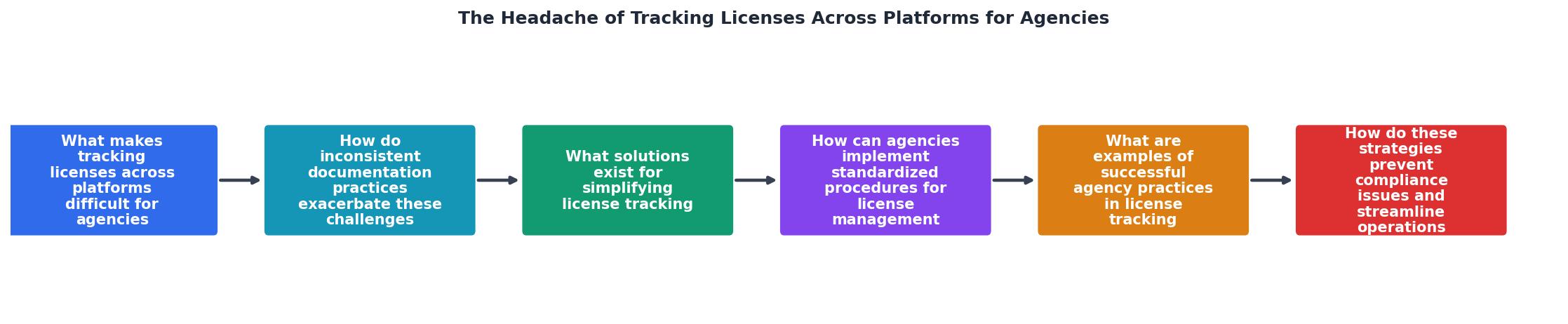
What Are Examples of Successful Agency Practices in License Tracking?
Some agencies have successfully implemented best practices for license tracking:
- Centralized Dashboards: Agencies have built centralized dashboards that aggregate license data from various platforms, providing a single source of truth.
- Automated Alerts: Using automated systems to send alerts when licenses are about to expire or need renewal.
- Regular Audits: Conducting regular audits to ensure all licenses are up-to-date and compliant with legal requirements.
How Do These Strategies Prevent Compliance Issues and Streamline Operations?
By standardizing procedures and adopting integrated tools, agencies can significantly reduce the risk of compliance issues. These strategies streamline operations by minimizing manual intervention and reducing the time spent on license management. As a result, agencies can focus more on creative output rather than administrative tasks.
FAQ
Frequently Asked Questions
Checklist for Implementing Standardized License Management Procedures
Standardized License Management Procedures
Your progress is saved automatically in your browser.
Finally, how are you currently managing your agency's licenses across multiple platforms? Share your experiences in the comments below.
Additional Resources
- Track software licenses: Effective strategies & tools - Without proper tracking, businesses risk overspending on unused licenses. This can lead to financial waste. Software asset management (SAM) plays a vital role.
- perils of forgoing software license management - High cost of low oversight Lack of visibility increases the likelihood that agencies will overpay for software licenses.
- Stop Manually Tracking Producer Licenses - 1. Contact more leads. Not everyone is a fan of cold-calling, but there's no doubt it's more likely to lead to revenue than spending time manually tracking ...